



Angular ball bearings — more precisely called angular contact ball bearings — are the first choice when a rotating shaft must withstand both radial and axial forces at the same time. Their defining feature is a designed contact angle between balls and raceways, usually 15°, 25°, 30° or 40°, which lets the bearing transfer load along the shaft axis instead of only across it. For high-speed spindles, gearbox shafts, pumps and any rotor carrying combined load, this bearing type offers axial capacity and stiffness that a standard deep groove ball bearing simply cannot match.
What Are Angular Ball Bearings?
Angular contact ball bearings are precision rolling bearings engineered to carry combined radial and axial loads through a defined contact angle between the balls and the raceways.
Manufacturers grind the inner and outer ring raceways with one shoulder higher than the other, so the balls touch the rings along an inclined line rather than through the radial plane. That inclination — commonly 15°, 25°, 30° or 40° — is what converts part of the bearing's radial capacity into axial capacity.
- 15° contact angle: highest speed capability, moderate axial capacity, typical of machine tool spindles.
- 25° contact angle: balanced speed and thrust, a common general-purpose selection.
- 30° contact angle: higher axial capacity, often used in pumps and compressors.
- 40° contact angle: maximum axial load capacity, suited to heavy-duty shafts at moderate speed.
 7 Series Angular Contact Bearings from Kangtian BearingThese angular contact bearings use inclined raceways to handle axial loads in one direction, requiring paired or double-row setups. The supplier offers high-volume production and ISO certifications, making it relevant for comparing axial-load solutions.View Product →
Because a single row can only resist axial load in one direction, alternating thrust requires a matched pair or a double-row design. That is a fundamental installation difference from a deep groove bearing, which accepts light thrust in both directions within one compact unit.
Angular Contact vs Deep Groove Ball Bearings
Deep groove ball bearings and angular contact ball bearings differ fundamentally in how they manage axial loads, and that difference decides which type your application needs.
A deep groove bearing is simple, quiet and economical. It can absorb moderate axial load — roughly up to half of the unused radial capacity — because of the depth of its raceway grooves. But as axial force increases, the balls press sideways against the groove shoulder, overload the contact ellipse, and generate heat, wear and noise. An angular contact bearing avoids this by directing the load along a designed inclined path. The table below compares both types for bearings of the same bore size and series.
| Property | Deep Groove Ball Bearing | Angular Contact Ball Bearing |
|---|---|---|
| Contact angle | 0° (radial contact) | 15°, 25°, 30° or 40° |
| Axial load capacity | Low to moderate, both directions | High in one direction; up to 70–120% of radial rating at 40° |
| Radial load capacity | Very high for its size | Slightly lower due to narrower raceway contact |
| Speed capability | Moderate to high | Very high, especially at 15° and with light cages |
| Stiffness | Low to moderate | High, further improved by preload |
| Bi-directional axial load | Yes, within limits | Single row: one direction only; pairs or double rows: both directions |
| Mounting | Simple, no preload required | Normally a matched pair with controlled preload |
| Relative cost | Low | Higher |
The practical rule is simple: if most of the load is radial and axial load is small, occasional or intermittent, stay with a deep groove ball bearing. If axial load is continuous, high, or combined with high speed and the need for rigidity, an angular contact bearing is the correct upgrade.
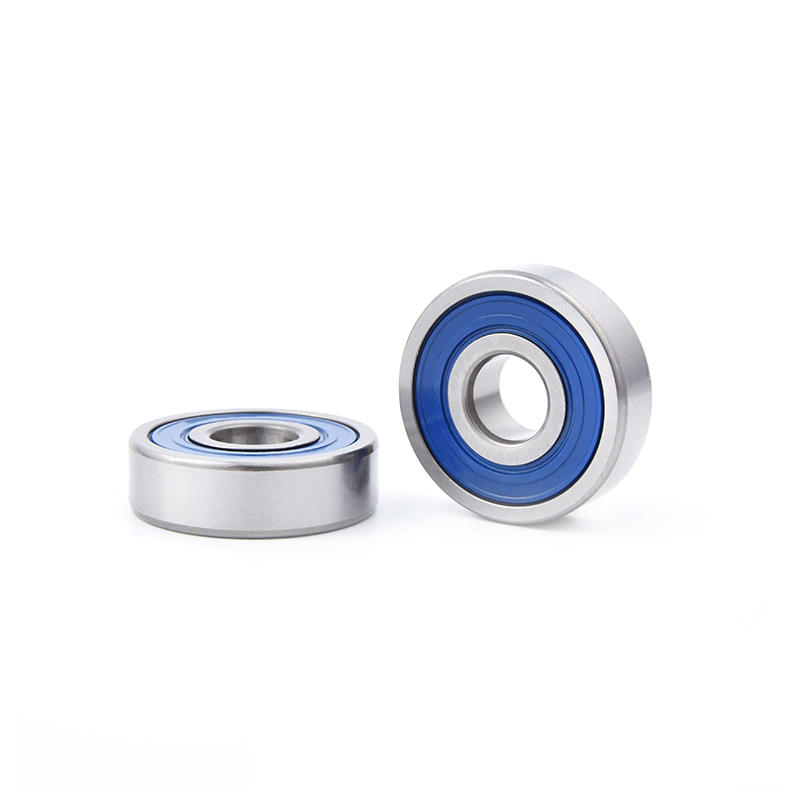
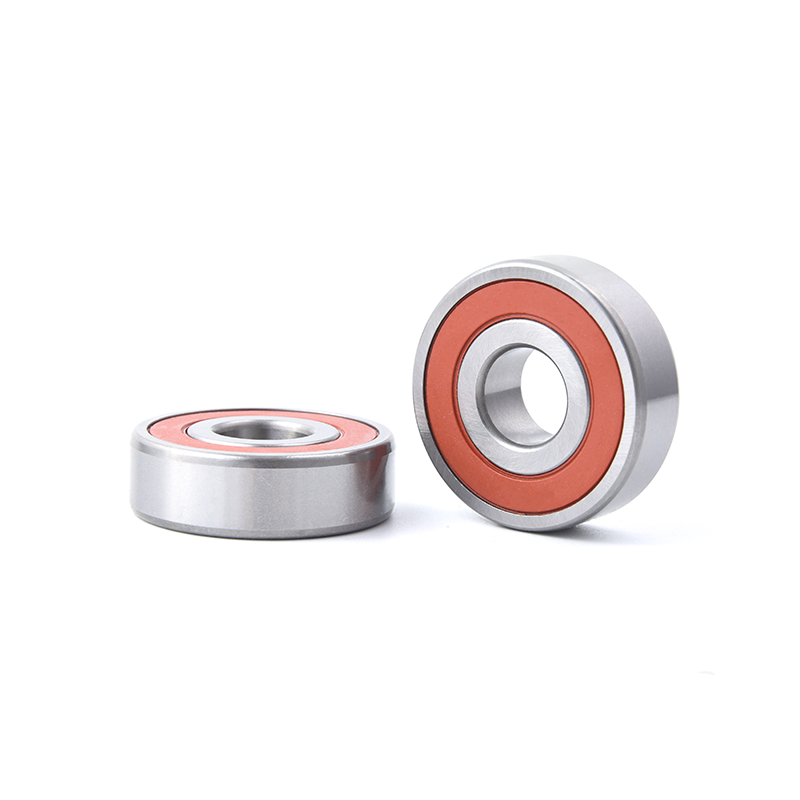
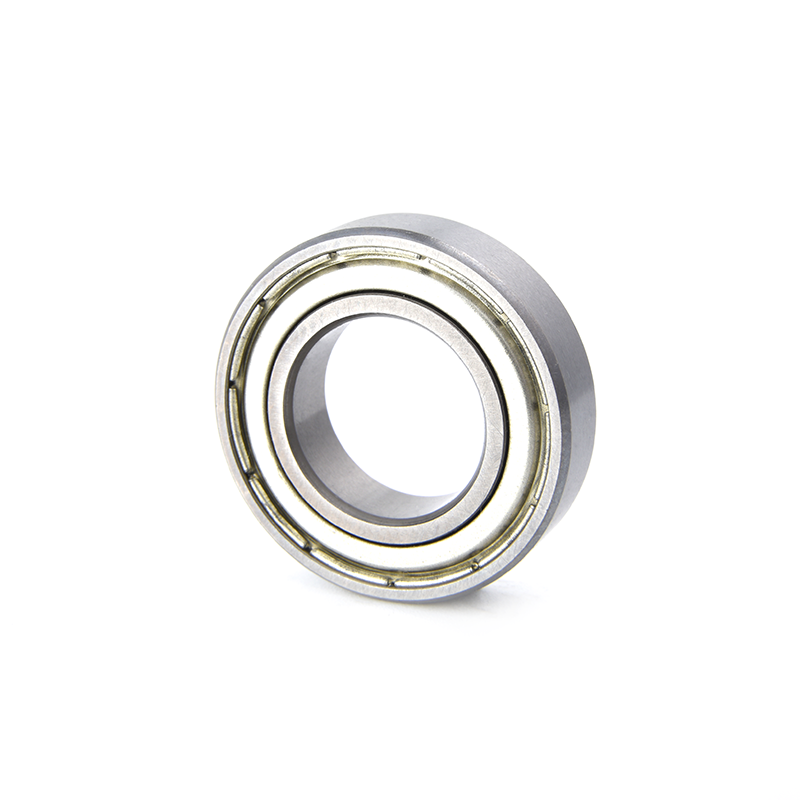
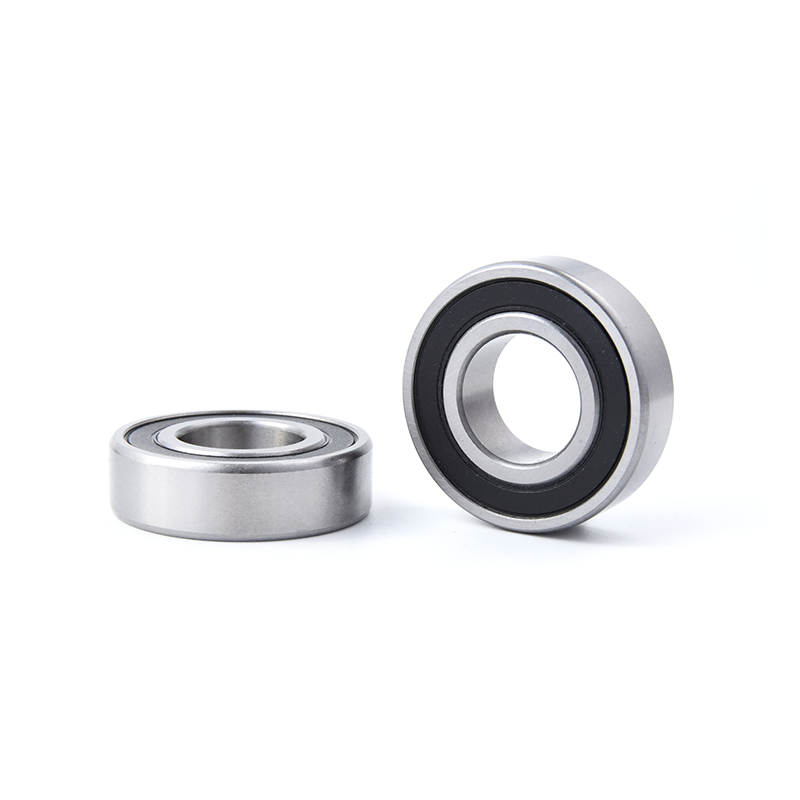
Deep Groove Ball Bearings for Light Axial LoadsThis manufacturer's deep groove ball bearings suit applications where axial load is small or intermittent, as discussed in the comparison. Production includes multiple seal types and materials, making it a reliable fallback for combined-load scenarios.View Product →
To understand how far you can push a deep groove bearing before it becomes the weak point, our engineering note on deep groove ball bearings under combined radial and axial loads explains the load limits in detail.
Single Row, Double Row and Mounting Arrangements
Because a single-row angular contact bearing resists axial load in one direction only, the mounting arrangement is not a detail — it is the design itself.
Back-to-back arrangement (DB)
Two bearings are mounted with their load lines pointing away from each other. This creates the widest effective load centre and the highest moment stiffness, making DB the preferred arrangement for machine tool spindles and precision rotary tables.
Face-to-face arrangement (DF)
The load lines point toward each other. This compact arrangement tolerates slight misalignment and is often used when space is tight, although its moment stiffness is lower than DB.
Tandem arrangement (DT)
Both bearings resist axial load in the same direction. Tandem mounting is used when one-way thrust is extremely heavy and two bearings must share the load, such as in large helical gear units and high-pressure pumps.
Preload
Preload is the deliberate insertion of internal load to remove clearance and raise stiffness. Light preload suits high-speed running; heavy preload increases rigidity but also raises friction and temperature. The correct preload class should always be chosen with the manufacturer's data, not by trial.
Typical Applications for Angular Contact Bearings
Angular contact bearings power every machine that needs speed, thrust and stiffness at the same time, from precision spindles to vehicle wheel hubs.
- Machine tool spindles, where stiffness and accuracy are critical at 10,000–40,000 rpm.
- High-speed electric motors and EV traction motor shafts.
- Centrifugal pumps and compressor rotors subject to large impeller thrust.
- Gearbox shafts and planetary gear trains, often arranged in tandem pairs.
- Industrial robot joints and rotary tables requiring zero backlash and high rigidity.
- Automotive wheel hubs, typically with two angular contact bearings facing each other.
- Centrifuges, textile spindles and printing machines with long continuous running hours.
The list is not exhaustive. Any rotating assembly that must carry a defined axial load while running at speed will benefit from an angular contact design.
How to Select the Right Angular Contact Ball Bearing
Bearing selection is a six-step process that begins with the actual load spectrum, because every subsequent decision depends on the ratio of radial to axial force.
- Calculate the equivalent dynamic load. Combine radial and axial forces using the bearing's X and Y factors, then compare the result with the required L10 life in operating hours.
- Fix the contact angle. Choose 15° or 25° when speed is the priority; choose 30° or 40° when thrust is dominant.
- Decide single row, double row or matched pair. Bi-directional thrust and spindle stiffness normally point to a matched pair.
- Select the accuracy grade. General machinery can use normal tolerance (ABEC-1/P0), while spindles and robots need P5 or better for controlled run-out.
- Choose the cage material. Machined brass or phenolic cages run faster; steel and polyamide cages are economical for standard industrial duty.
- Define lubrication and sealing. Grease suits most applications; oil circulation or oil-air lubrication is required above the greasable speed limit.
If the load calculation shows that axial force is small and infrequent, a 6200-series deep groove bearing often satisfies the duty at a lower cost. In that case, the simple deep groove design remains the practical option.
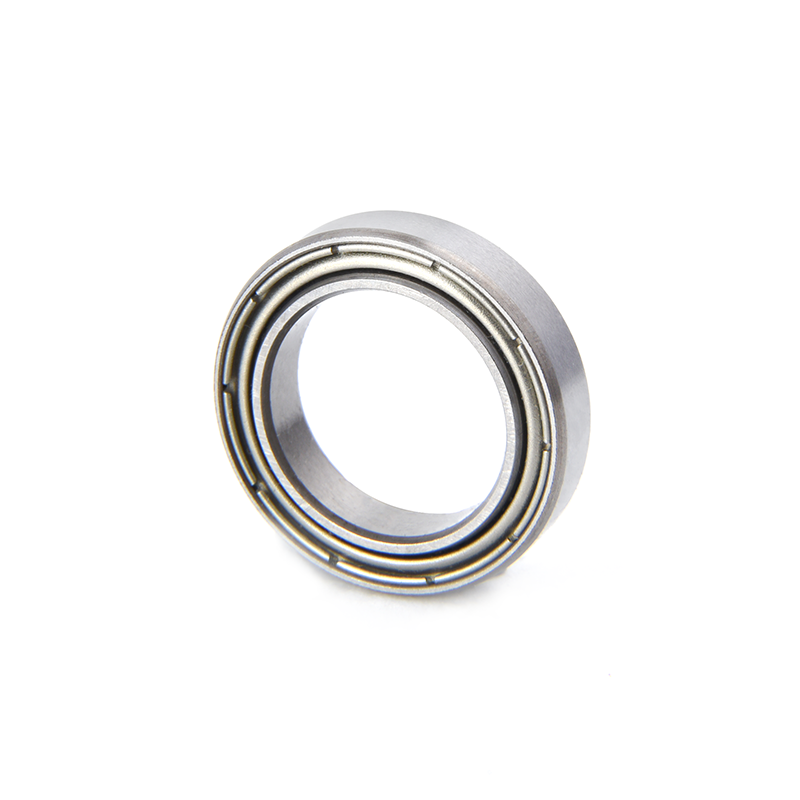
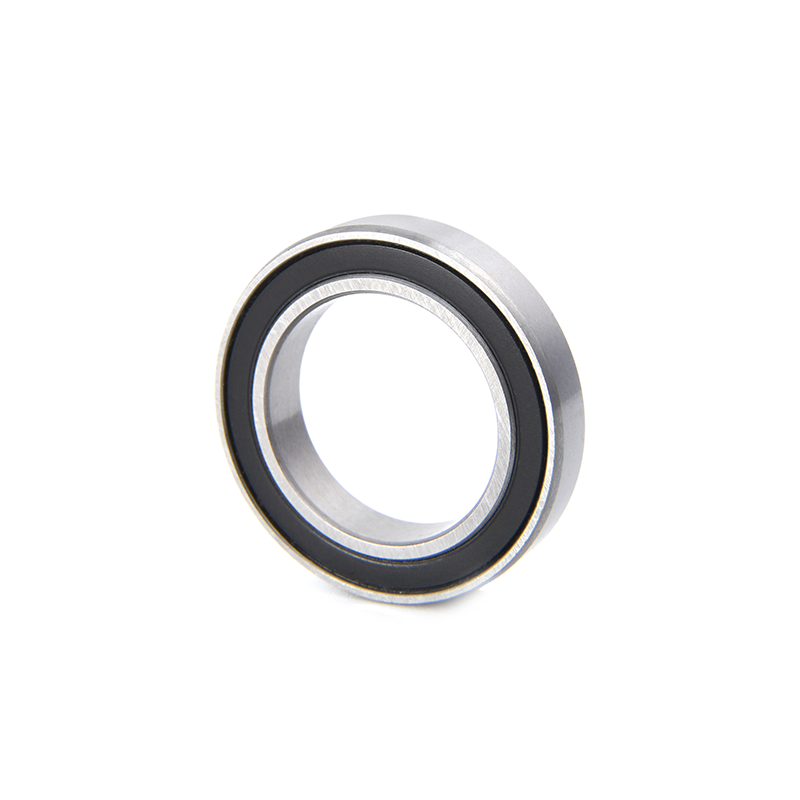
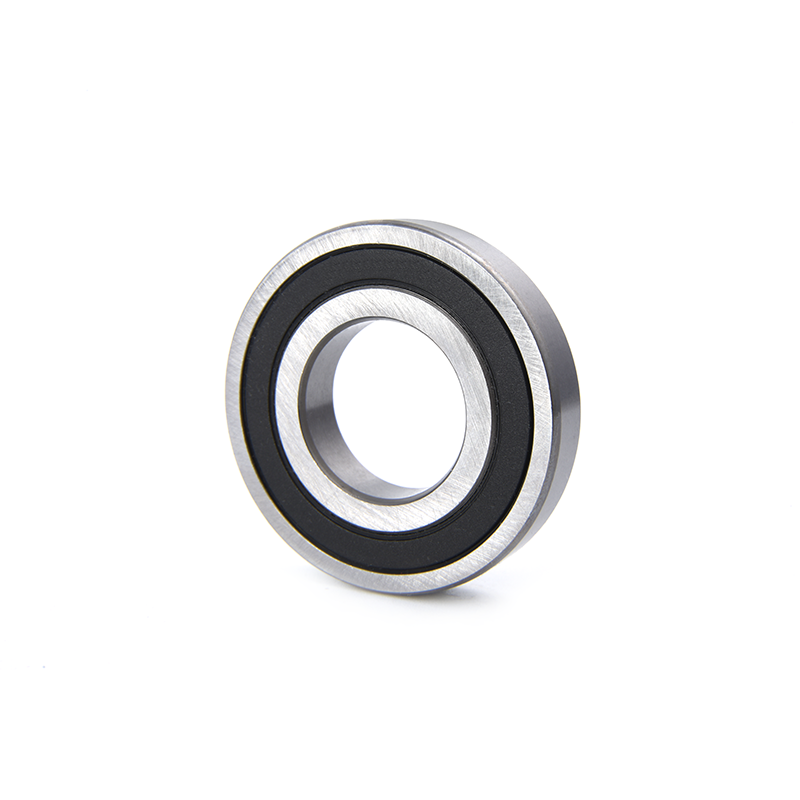
62 Series Deep Groove Ball Bearings with Flexible OptionsThe 62 series offers a cost-effective choice when axial force is minor, as noted in the preceding text. With various seals, clearances, and precision grades, these bearings serve diverse industries and can be tailored to your load requirements.View Product →
For dimension tables, fitting tolerances and inspection guidance, consult our technical data library before finalising your drawing.
Frequently Asked Questions
Can angular contact ball bearings handle radial loads?
Yes. Every angular contact ball bearing supports radial load, and its radial capacity depends on the contact angle and the ball complement. A 7000-series single-row bearing handles a high radial component while simultaneously carrying part of the load axially; this is why it replaces deep groove bearings in high-stiffness spindles.
What is the difference between an angular contact and a deep groove ball bearing?
The raceway geometry. A deep groove bearing has symmetrical grooves and a nominal 0° contact angle, giving it modest thrust capacity in both directions. An angular contact bearing has an oblique contact angle that increases axial capacity in one direction and improves rigidity, at the cost of requiring paired mounting for bi-directional thrust.
Why must angular contact bearings be used in pairs?
Because one row can only push back in one axial direction. Without an opposite bearing, the shaft moves freely under reverse thrust. Mounting two bearings back-to-back, face-to-face or in tandem covers that direction, creates preload, and dramatically increases the stiffness of the shaft system.
Which contact angle should I choose for high-speed operation?
A 15° or 20° angle. Smaller angles generate less axial preload force and reduce spinning friction at speed, keeping temperature and power loss lower. If you need both high speed and substantial thrust, consider a hybrid pair or an oil-air lubrication system.
Can a deep groove ball bearing replace an angular contact bearing?
Often not. For lightly loaded shafts with low axial force and moderate speed, a deep groove bearing works well. But for higher thrust, better spindle accuracy, lower deflection, and stable high-speed running, the angular contact bearing is the engineered answer. Retrofitting without recalculating loads and speeds will generally shorten bearing life.
Angular ball bearings solve a combination of radial load, axial load, speed and stiffness that no other rolling bearing handles as efficiently in a single-row format. Start from the real load spectrum of your machine, choose the contact angle and arrangement deliberately, and specify the correct preload when precision matters. Work through those parameters and an angular contact bearing will deliver predictable, long service life even in demanding applications.



Contactaţi-ne